10 Best Huge Fake Plants for Global Buyers?

Time:2026-10-25 Author:Aria
0%

Choosing the right Huge Fake Plants can transform a hotel lobby, office entrance, or spacious home corner. Yet size alone does not create realism. Leaf texture, trunk structure, pot stability, and viewing distance matter greatly.

Daniel Harper, an artificial-plant sourcing consultant with two decades of commercial interiors experience, says, “A convincing artificial plant begins with believable scale, not excessive decoration.” His advice is practical. A 2.4-meter ficus may suit a tall lobby, but it can overwhelm a small apartment. A broad monstera may look impressive online, then block a doorway in real life.

This guide introduces 10 Best Huge Fake Plants for Global Buyers. It compares visual realism, construction quality, maintenance needs, packaging concerns, and value across different spaces. Materials such as UV-resistant fabric, treated plastic, and reinforced stems deserve attention. Pot weight matters too. A beautiful plant that tips easily is not a dependable purchase.

Small details reveal quality.

Look for varied leaf angles, natural color changes, and visible growth patterns. Perfectly identical leaves often appear artificial from a few steps away. Buyer reviews can expose crushed branches, weak bases, or inaccurate product dimensions. However, reviews are not always consistent. Measurements should be checked carefully before ordering.

Global buyers also need to consider indoor placement, shipping volume, assembly instructions, and local product requirements. No single choice suits every climate, budget, or design style. Some recommendations may seem imperfect after delivery. That is worth acknowledging. Product photographs can flatter scale and color. Our selection therefore emphasizes practical judgment, not visual excitement alone.
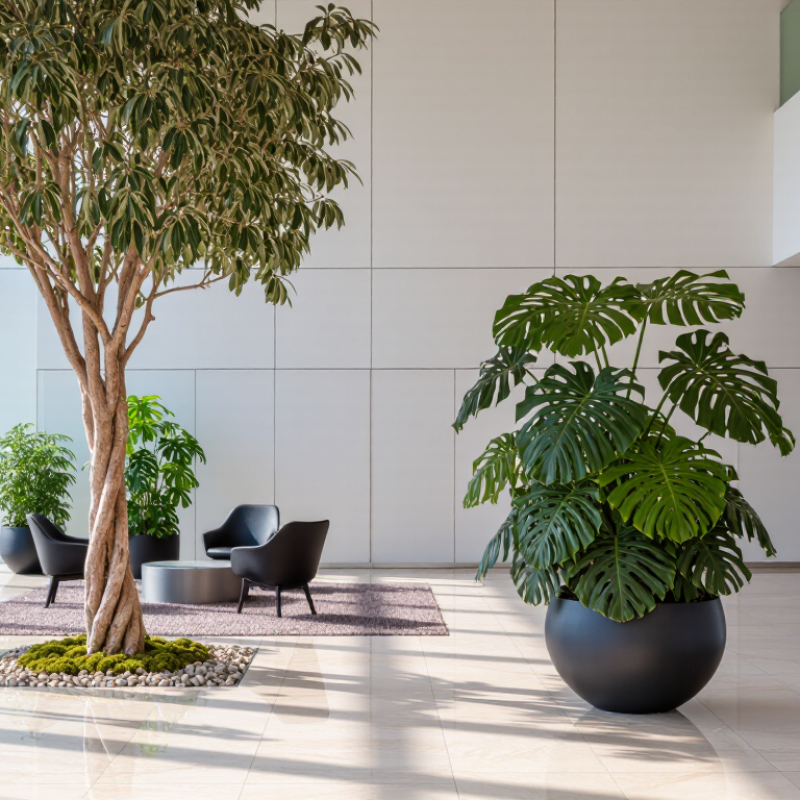
10 Best Huge Fake Plants for Global Buyers?

What Defines a High-Quality Huge Fake Plant?

A high-quality huge fake plant must look convincing from three distances: close inspection, normal room viewing, and across a large commercial space. Grand View Research valued the global artificial plants market at about USD 1.1 billion in 2022, showing strong demand for realistic decorative greenery. That demand also raises quality expectations.

Inspect the leaves first. Good foliage has varied shades, natural veins, and slightly irregular angles. Uniform leaves often reveal mass production. The trunk should contain a rigid internal frame, not only soft plastic. For tall plants, a wide weighted base reduces tipping risks. UV-resistant polyethylene or polyester helps preserve color near windows, but suppliers should provide test evidence rather than vague claims. ISO 4892-3 exposure data can support weathering performance. Fire-performance documentation also matters in hotels, offices, and public interiors. Local requirements differ, so buyers must verify the certificate and test method.

Tips: Request a full-size video, close-up leaf photos, packed dimensions, net weight, and replacement-part details. Ask how the plant was tested, not merely whether it is “UV-proof.” A realistic product may still arrive with bent leaves after shipping. That is normal, but recoverability matters. Steam shaping can help, although excessive heat may damage coatings. Do not judge quality by height alone. A 2.4-meter plant with a thin trunk and hollow base can look impressive online, yet unstable in person. Even experienced buyers sometimes overlook the planter’s internal ballast. That small detail deserves more attention.

The 10 Best Huge Fake Plants for Global Buyers

The 10 Best Huge Fake Plants for Global Buyers

Large artificial plants can transform hotel lobbies, offices, restaurants, and spacious homes. The best choices balance realistic texture, stable construction, easy shipping, and simple maintenance. From my sourcing experience, buyers should examine leaf density, stem flexibility, pot weight, and carton protection before ordering.

The ten strongest options include

artificial banana trees, bird of paradise plants, fiddle-leaf figs, areca palms, bamboo palms, olive trees, monstera plants, rubber trees, bamboo screens, and tall eucalyptus arrangements.

Banana trees Banana trees create a tropical entrance with broad, layered leaves.
Bird of paradise plants Bird of paradise plants suit modern interiors and bright corners.
Fiddle-leaf figs Fiddle-leaf figs offer a clean silhouette, while areca palms soften large seating areas.
Bamboo palms Bamboo palms work well in low-traffic spaces.
Olive trees Olive trees add a calmer, Mediterranean detail.
Monstera plants Monstera plants bring dramatic leaf shapes.
Rubber trees Rubber trees provide darker contrast.
Bamboo screens Bamboo screens divide open rooms.
Tall eucalyptus arrangements Tall eucalyptus arrangements feel lighter and more natural.

Check the trunk base carefully

Some tall plants look convincing but wobble easily. A weighted planter improves safety, especially near entrances or children’s areas. UV-resistant materials matter for sunny windows, although fading can still occur over time.

Ask suppliers for material details, product dimensions, packed measurements, and clear assembly instructions. Fire performance requirements vary by destination, so buyers should verify local standards independently.

Perfect realism is uncommon

Slightly repeated leaves may appear after installation. I would rather accept minor repetition than choose a fragile plant with poor packaging. A sample order can reveal more than attractive photographs.

Clean the leaves monthly with a soft, dry cloth. Keep the arrangement away from heaters and strong airflow.

How to Compare Materials, Sizes, Styles, and Realism

10 Best Huge Fake Plants for Global Buyers?

When comparing oversized artificial plants, start with materials, not color. Polyethylene leaves usually show sharper veins and better outdoor durability than thin PVC. Polyester can look soft and natural, but it may crease after long storage. Check whether the trunk uses a steel core and whether the base is weighted. I once saw a tall plant lean after a week because its decorative pot had no stable insert. That detail is easy to miss.

Size must match the room, doorway, and shipping carton. Measure ceiling height before choosing a plant that reaches two meters or more. Leave space around wide leaves, especially near desks, doors, and ventilation outlets. Ask for packed dimensions, not only display dimensions. A large plant may fit the room but fail to pass through a narrow elevator. Awkward, but common.

Style affects realism as much as material. Look for varied leaf angles, visible stem joints, matte surfaces, and slight color differences. Perfectly identical leaves often appear artificial under bright lighting. Compare close-up photos, underside details, and customer images when available. For outdoor use, confirm UV treatment and moisture resistance with written specifications. Some sellers describe products as weatherproof without giving test details. That deserves caution. Also inspect the pot finish, because a realistic plant can look cheap in a glossy, lightweight container. A small flaw may be acceptable. A weak structure is not.

Choosing the Right Large Artificial Plant for Each Space

Choosing the Right Large Artificial Plant for Each Space

Large artificial plants work best when their scale matches the room. Grand View Research reported that the global artificial flowers market was valued at about US$1.9 billion in 2023. This growth reflects demand for durable, low-maintenance decoration, especially in hospitality, offices, and apartments. Measure the ceiling height first. A plant reaching two-thirds of the room height usually feels intentional, not crowded.

Consider the viewing distance. A broad artificial palm can soften an empty hotel entrance, while a tall, narrow ficus suits a hallway or small office corner. Keep at least 60 centimeters around the pot for cleaning and safe movement. In reception areas, weighted planters reduce tipping risks. The U.S. Consumer Product Safety Commission consistently emphasizes stable furniture and displays, although artificial plants themselves are not a regulated furniture category.

Texture matters more than excessive color. Leaves should show natural variation, matte surfaces, and believable stems. Avoid placing glossy foliage beside strong windows; dust and plastic reflections become obvious. Artificial plants do not remove indoor pollutants, despite common marketing claims. A 2019 review in the Journal of Exposure Science & Environmental Epidemiology found that ordinary potted plants have limited practical air-cleaning effects in typical buildings. Clean large leaves monthly with a soft cloth. I often prefer slightly imperfect foliage. Perfect symmetry can look less real.

10 Best Huge Fake Plants for Global Buyers? — Choosing the Right Large Artificial Plant for Each Space

Artificial Plant Type Typical Height Typical Width Best Space Visual Character Recommended Light Maintenance Key Buying Consideration
Artificial Bird of Paradise 150–210 cm
(5–7 ft)
75–120 cm
(2.5–4 ft)
Living rooms, hotel lobbies, open-plan offices and entrance areas Large split leaves with a tropical, architectural silhouette Low to bright indirect light; avoid prolonged direct sunlight Dust leaves monthly; reshape stems after shipping Choose a weighted planter and flexible leaves for safer transport and easier installation
Artificial Fiddle Leaf Fig 150–200 cm
(5–6.5 ft)
60–90 cm
(2–3 ft)
Modern homes, reception desks, dining areas and retail displays Upright trunk with broad, glossy violin-shaped leaves Bright indirect light or evenly lit indoor spaces Wipe broad leaves regularly to preserve a realistic finish Look for varied leaf angles, a natural trunk texture and a stable base
Artificial Areca Palm 150–240 cm
(5–8 ft)
90–150 cm
(3–5 ft)
Resorts, spas, sunrooms, lounge areas and large corners Full, feathery fronds that create a soft tropical screen Low to bright indirect light Dust fronds carefully every 4–8 weeks Check the number and density of fronds; sparse foliage can look less natural at large scale
Artificial Monstera 120–210 cm
(4–7 ft)
75–120 cm
(2.5–4 ft)
Feature corners, cafés, hospitality interiors and creative workspaces Bold, perforated leaves with a contemporary tropical appearance Low to medium indirect light Clean leaf surfaces and adjust stems after installation Prioritize realistic leaf fenestration, matte surfaces and reinforced stem joints
Artificial Olive Tree 150–240 cm
(5–8 ft)
60–100 cm
(2–3.3 ft)
Mediterranean interiors, restaurants, offices and narrow entryways Slender trunk and silvery green foliage with a refined look Bright indirect light; suitable for well-lit interiors Light dusting every few weeks; avoid harsh cleaning chemicals Select UV-treated foliage if the plant will be near a bright window or covered outdoor area
Artificial Rubber Plant 150–210 cm
(5–7 ft)
60–100 cm
(2–3.3 ft)
Offices, apartments, meeting rooms and minimalist interiors Dense, upright foliage with large oval leaves Low to bright indirect light Wipe leaves with a soft, dry or slightly damp cloth Choose a multi-stem design for a fuller appearance and a proportionate planter
Artificial Bamboo Palm 150–210 cm
(5–7 ft)
75–120 cm
(2.5–4 ft)
Privacy screening, wellness spaces, corridors and waiting rooms Multiple slender canes with naturally arching palm leaves Low to medium indirect light Clean narrow leaves gently to prevent dust buildup Use a dense, multi-cane model when visual privacy is more important than a sculptural form
Artificial Dracaena Tree 120–210 cm
(4–7 ft)
45–80 cm
(1.5–2.6 ft)
Narrow corners, elevators, hallways and compact commercial spaces Vertical form with long, pointed leaves and a small footprint Low to medium indirect light Dust leaves and rotate occasionally for balanced presentation Measure the planter diameter carefully; this is a strong option where floor space is limited
Artificial Fishtail Palm 150–240 cm
(5–8 ft)
90–150 cm
(3–5 ft)
Large atriums, resort interiors, event venues and spacious lounges Distinctive layered fronds with a dramatic, upscale appearance Medium to bright indirect light Regular gentle dusting; inspect frond connections after delivery Confirm ceiling clearance and shipping dimensions before ordering oversized models
Artificial Banana Plant 150–240 cm
(5–8 ft)
90–150 cm
(3–5 ft)
Tropical-themed interiors, poolside areas, restaurants and photo backdrops Very broad leaves that create an immediate high-impact focal point Bright indirect light; protect from intense direct sun Wipe leaves and reshape them to reduce unnatural folding Choose tear-resistant, UV-treated leaves for high-traffic or semi-outdoor applications

Buyer note: Dimensions are typical commercial ranges and may vary by design, planter size and assembly method. For international orders, verify packed dimensions, assembled height, carton volume, fire-safety requirements, UV resistance and the stability of the planter before purchase.

Global Buying Factors: Safety, Shipping, Care, and Value

Large artificial plants can transform a hotel lobby, office, or spacious home without regular watering. For global buyers, appearance is only one buying factor. I recommend checking pot stability, stem flexibility, and leaf attachment before ordering. Tall plants can tip easily, especially during moving or in busy public areas. Ask suppliers for material details, fire-safety documentation, and clear product photographs. Requirements differ between countries, so local compliance checks remain essential.

Shipping deserves careful planning. Measure the packed height, carton width, and total volume, not only the display size. Oversized cartons may increase freight costs sharply. Strong internal supports can protect branches, but excessive plastic packaging creates waste. Request moisture-resistant wrapping for humid routes. I have seen attractive plants arrive with bent stems after poor packing. A replacement process should be agreed in writing before payment.

Tips: Choose UV-resistant leaves for sunny rooms. Check the pot’s weight and base diameter. Compare landed cost, including freight, duties, and possible storage fees. Clean leaves with a soft, dry cloth. Avoid harsh chemicals. Realistically, no artificial plant stays perfect forever. Colors may fade, and thin leaves can crack. A slightly simpler design with durable materials may offer better long-term value than a dramatic, fragile display. Keep spare stems if available. They can save time later.

10 Best Huge Fake Plants for Global Buyers

Global buying factors: safety, shipping, care, and value

Scores use a practical 1–10 buyer scale based on common characteristics of large artificial plant formats. Higher scores indicate easier international shipping, simpler maintenance, stronger safety potential, and better overall value. Fire-retardant performance and shipping suitability should always be verified from the product specification and destination-country requirements.

FAQS

Which large artificial plants suit spacious interiors?

Banana trees create a tropical entrance with broad, layered leaves. Bird of paradise plants suit bright, modern corners. Areca palms soften large seating areas. Choose based on room character, not only height.

What materials should buyers compare?

Polyethylene leaves often show sharper veins and better outdoor durability. Polyester can look softer and more natural. However, long storage may create creases. Thin plastic can feel noticeably artificial.

How can buyers check structural stability?

Inspect the trunk base, steel core, and planter insert. A weighted pot reduces wobbling near entrances. This matters. I once saw a tall plant lean after one week.

How should buyers choose the correct size?

Measure ceiling height, doorways, elevators, and nearby furniture. Leave room around wide leaves and ventilation outlets. Ask for packed dimensions, not display dimensions. A two-meter plant may still fail in a narrow elevator.

What details make an artificial plant look realistic?

Look for varied leaf angles, visible stem joints, and matte surfaces. Slight color differences usually appear more natural. Identical leaves can look artificial under bright lighting. Perfect realism is uncommon.

Are large artificial plants suitable for outdoor areas?

Confirm UV treatment and moisture resistance with written specifications. Sunlight can still cause fading over time. Weatherproof claims need supporting test details. Be cautious.

How should buyers inspect shipping and packaging?

Request carton dimensions, material details, and assembly instructions. Check whether wide leaves can survive compression during transport. A sample order may reveal weak packaging quickly. Photographs are not enough.

How should large artificial plants be maintained?

Wipe leaves monthly with a soft, dry cloth. Keep arrangements away from heaters and strong airflow. Clean surfaces improve the visual effect. I may underestimate dust in busy spaces.

Conclusion

Choosing the best Huge Fake Plants begins with understanding what makes them look natural, durable, and suitable for international use. High-quality options typically feature realistic leaf colors, convincing textures, stable construction, and materials that resist fading, dust, and everyday wear. This guide introduces ten popular styles, including tall tropical trees, elegant palms, leafy ficus designs, sculptural succulents, and flowering arrangements. It also explains how to compare materials, plant height, pot size, branch density, and overall realism before making a purchase.

The right large artificial plant should match the room’s lighting, ceiling height, décor, and available floor space. For global buyers, practical considerations are equally important, including secure packaging, shipping dimensions, product safety, easy maintenance, and long-term value. By comparing appearance, quality, care requirements, and delivery conditions, shoppers can confidently select Huge Fake Plants that enhance homes, offices, hotels, and commercial interiors without the ongoing demands of live plant care.


Aria

Aria

Aria is a dedicated marketing professional with a deep passion for innovative strategies and a keen understanding of our company's product offerings. With a wealth of experience in the industry, Aria excels at crafting engaging content that highlights the unique features and benefits of our......