For global buyers, a Faux Rose Arrangement is more than a decorative product. It represents lasting beauty, practical merchandising, and a careful balance between realism and value. A well-designed arrangement should resemble fresh roses without appearing overly uniform. Petal texture, stem flexibility, color variation, and the stability of the container all influence buyer confidence.
J Schwanke, a respected floral designer, author, and host of Life in Bloom, often says, “Flowers make people happy.” That simple observation also applies to artificial flowers. Faux roses can brighten hotels, retail displays, wedding venues, offices, and homes without daily watering or rapid replacement. Still, not every arrangement creates that response. Some designs look too perfect. Others use shiny petals, weak stems, or crowded foliage. These flaws matter.
This guide explores the Top 10 Faux Rose Arrangement Ideas for Global Buyers, with attention to design appeal and practical purchasing concerns. Each idea considers where the arrangement may be used, how it photographs, and whether it can withstand repeated handling. Buyers should also review material quality, packaging protection, color consistency, and supplier communication. Small details often decide a large order.
There is room for judgment. A realistic rose may not suit every market. Some customers prefer bold colors and dramatic shapes. Others choose soft neutrals and restrained styling. That difference should not be ignored. The strongest Faux Rose Arrangement combines visual emotion with dependable construction, although finding both at an affordable price can be difficult.
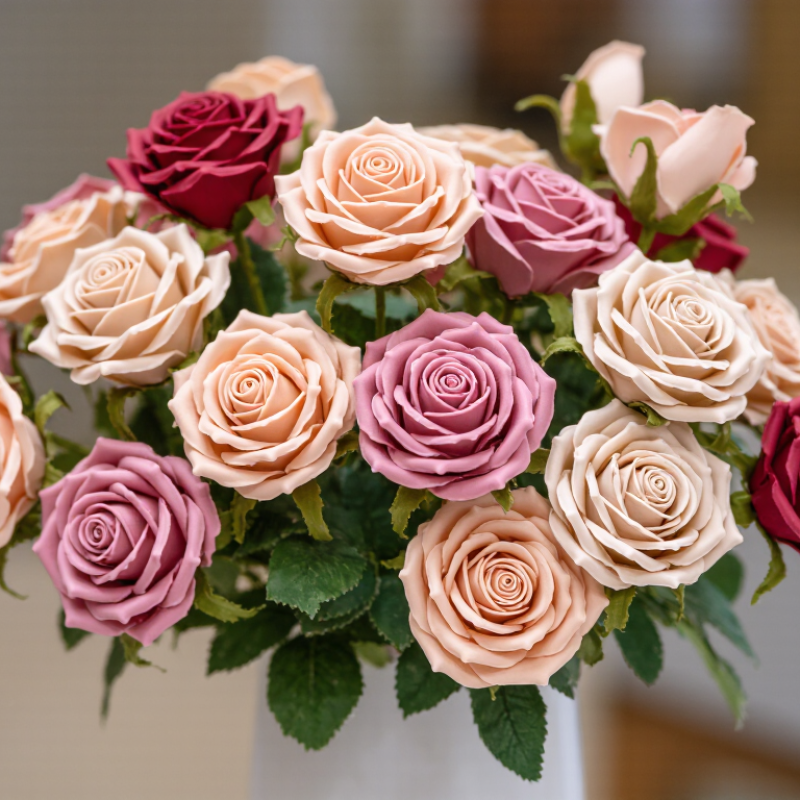
Global buyers often judge faux roses through photographs, but texture decides the real experience. In practical sourcing, petals should show gentle folds, not flat plastic edges. Stems need flexible wire cores and secure joins. A useful arrangement may combine blush roses, eucalyptus leaves, and a low ceramic vessel. Smaller table designs suit apartments, hotels, and seasonal displays.
Market Perspective Grand View Research estimated the global artificial flowers market at about USD 1.6 billion in 2022. Its report also projects steady growth through 2030. This trend reflects demand for reusable, low-maintenance decoration. Buyers should compare petal density, color consistency, packaging protection, and carton efficiency.
The ten strongest ideas include monochrome rose clusters, mixed-height centerpieces, hanging baskets, wreaths, wedding arches, bedside bouquets, entryway urns, rustic jars, pastel bundles, and compact gift arrangements.
Material claims require careful checking. Polyester petals can provide sharper color, while soft-touch coatings create a more natural surface. UV-resistant finishes may help outdoor displays, but performance depends on climate and exposure time. Intertek’s consumer-product testing guidance emphasizes documented material and performance checks.
Buyers should request sample photos, close-up videos, and batch comparisons. A sample can look excellent and still reveal loose petals after transport. That weakness matters.
Packaging should separate flower heads and protect stems from compression. Even experienced buyers sometimes overvalue visual realism and overlook odor, dust retention, or difficult assembly. A better review records both strengths and disappointments.
Look for softly folded petals and flexible stems with secure joins. Glossy plastic edges can look artificial under bright shop lights. Close-up photos help, but they cannot replace a physical sample.
Polyester petals usually handle moisture better than paper-based materials. Soft-touch surfaces can feel more natural. Recycled materials may support sustainability claims, but certificates need checking. Material choice is not always obvious.
Blush, ivory, and dusty pink suit weddings and home décor. Deep red and burgundy often fit festive collections. Muted neutrals and sage green may suit natural interior styles. Local preferences still matter more than general trends.
Tabletop designs suit apartments, bedside tables, and small gift shops. Medium arrangements work well on dining tables and reception counters. Floor-standing designs can serve hotels and large entryways. Three size ranges create useful choice.
Popular options include monochrome clusters, mixed-height centerpieces, and hanging baskets. Wreaths, wedding arches, rustic jars, and compact bouquets add variety. Interchangeable colors and stems can simplify seasonal merchandising. Some customers prefer slightly imperfect flowers.
Check petal edges, leaf attachment, stem flexibility, and color consistency. Bend several stems gently and inspect their bases for cracks. A strong chemical odor is a serious warning sign. Uneven petals may look charming, but not always.
Separate flower heads to reduce compression during transport. Secure stems so they cannot move inside the carton. Use moisture-resistant inner protection and a sturdy outer carton. Beautiful samples sometimes arrive damaged. That happens.
Confirm carton dimensions, gross weight, product value, and customs descriptions. Check destination requirements before placing a large order. Request packaging photos or a small trial shipment when possible. Long routes expose weaknesses that showroom samples hide.
Ask whether the arrangement has a UV-resistant finish. Test it under the destination’s actual climate and lighting conditions. Sun, humidity, and exposure time can change performance. A general outdoor claim may be too vague.
This guide introduces the Faux Rose Arrangement as a versatile, low-maintenance décor solution for global buyers, covering how to choose suitable materials, colors, sizes, and styles for different markets and customer preferences. It explores ten creative arrangement ideas for homes, hotels, offices, events, retail spaces, and seasonal displays, helping buyers match floral designs with various interior settings and commercial uses.
The article also explains how to assess product quality, color stability, material safety, packaging protection, and international shipping readiness. Buyers will learn how to compare suppliers, customization services, pricing structures, minimum order quantities, and bulk purchasing options. By considering design flexibility, reliable production, efficient packaging, and dependable communication, importers and retailers can select Faux Rose Arrangement products that offer attractive presentation, consistent quality, and practical value across multiple markets.

 Senmao garden