Top 10 Tall Fake Plant Suppliers in China

Time:2026-11-08 Author:Oliver
0%

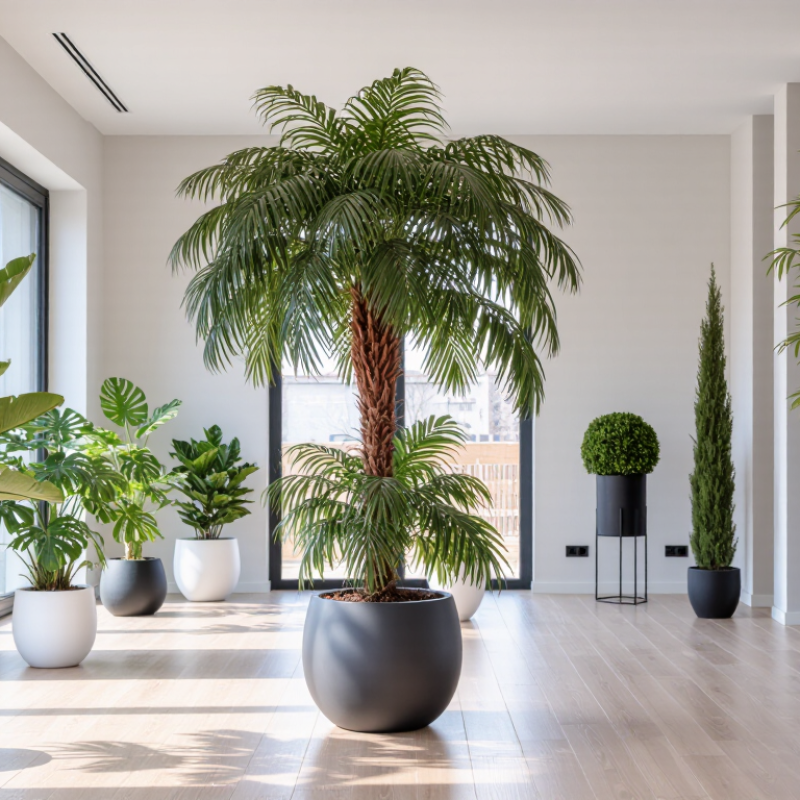
Tall artificial plants can bring height and greenery to hotels, offices, showrooms, and homes without regular watering. But choosing a supplier involves more than comparing catalog photos. This guide to the Top 10 Tall Fake Plant Suppliers in China introduces companies for buyers to research, not a guaranteed ranking of quality or service. A Tall Plant Fake arrangement may look convincing online, yet details such as leaf texture, stem flexibility, and pot stability matter in person.

When comparing suppliers, request clear specifications for overall height, materials, planter options, and packing dimensions. Ask for recent product photos, sample availability, customization details, and written estimates for production and shipping. Check how the supplier handles questions and whether key claims can be documented. For large orders, packaging deserves attention: a bent branch or crushed leaf can change the display after transit. Small details count.

No shortlist is perfect. Supplier information can change, and a polished website alone is not proof of consistent quality. Use the profiles as a starting point, then confirm current products, terms, and sample quality directly. Consider where each plant will be placed, too; a tall tree beside a bright window may need different materials than one in a shaded lobby. This guide aims to make that comparison more practical, while leaving room for careful checking.
Top 10 Tall Fake Plant Suppliers in China

What Tall Artificial Plants Are and Where They Are Used

Tall artificial plants are floor-standing faux trees or leafy stems designed to add height without needing soil or sunlight. Many stand roughly 1.2 to 2.5 metres tall, though proportions vary. Leaves may be molded plastic or fabric, while flexible branches help create a less rigid silhouette. A weighted base keeps the plant stable inside its decorative pot. Materials and finish matter: glossy leaves can look artificial under bright lighting, while dusty foliage quickly loses its appeal.

These plants are often used in hotel lobbies, offices, restaurants, retail displays, and homes with empty corners or high ceilings. A tall ficus-style form can soften a plain reception area; a narrow bamboo-like shape may fit beside a doorway. They can also add privacy near a window or divide seating areas without blocking all the light. Not always. A showroom photo can make a plant look fuller than it feels in a dim corner. Measure the space, check the spread of the branches, and consider how easily the leaves can be cleaned. In busy settings, a stable pot and durable foliage are practical details, not just decoration.

How to Assess Tall Fake Plant Suppliers in China

Assess tall fake plant suppliers by checking repeatable quality, not showroom impact. Grand View Research’s Artificial Plants Market report estimated global revenue at about US$1.6 billion in 2022 and projected 4.5% annual growth through 2030. This signals demand, not supplier reliability. Request a production sample matching the quoted materials, height, pot, and leaf density. Measure the plant from pot base to highest branch, then compare several units for height and shape. Looks can mislead. Ask for records.

Inspect trunk joints, wire flexibility, leaf attachment, and pot stability. For a two-metre tree, gently press the crown and check whether the base rocks or branches expose bare wire. Ask for material specifications, colorfastness or UV-test results when outdoor use is claimed, and the test method behind each result. Request carton dimensions and a packed sample; long branches can arrive bent even when the plant itself is well made. Compare pre-shipment photos with an approved sample and agree on defect limits in writing. One limitation: a single sample cannot prove every production run will match. Ask how the supplier handles failed inspections, replacement parts, and documented corrective actions. A fast, specific answer is useful evidence, but it is not a substitute for verification.

Top 10 Tall Fake Plant Suppliers in China - How to Assess Tall Fake Plant Suppliers in China

A practical supplier-assessment checklist. The criteria below are not a verified ranking of individual companies.

No. Assessment dimension What to verify Evidence to request Potential warning sign
1 Product range and height options Check whether the supplier offers the required tree and plant types, overall heights, canopy widths, pot options, and indoor or outdoor versions. A current product catalogue, itemized specification sheets, and photos showing products beside a measuring scale. Dimensions are described only as “large” or “custom” without confirmed measurements or product-level specifications.
2 Materials and construction Confirm the materials used for leaves, trunks, branches, internal supports, and pots. Ask how branches attach and whether the structure can support the plant at its stated height. A bill of materials or written material declaration, construction details, and a sample that can be inspected. Material descriptions are vague, or the sample differs from the materials specified in the quotation.
3 Stability and packaging Assess the base, pot, internal frame, and assembled stability. Check how the plant is protected against crushing, abrasion, and deformation during transport. Assembly instructions, packaging specifications, packed-sample photos, and a sample inspection after unpacking. The supplier cannot explain how tall items are secured in the pot or protected in transit.
4 Customization capability Confirm whether the supplier can adjust height, foliage density, leaf color, trunk finish, pot style, or packaging, and clarify which changes affect cost and lead time. A written specification or approved pre-production sample showing the agreed custom features. Custom requirements are accepted verbally but are not recorded in the purchase specification.
5 Quality-control process Ask how incoming materials, production, assembly, and finished goods are checked. Agree on inspection points and acceptance criteria before production. A sample inspection checklist, defect classification, and a recent inspection report for a comparable order, with confidential details removed if needed. Quality is described as “checked” without a defined process, records, or agreed product tolerances.
6 Samples and production consistency Compare the approved sample with production goods for height, color, foliage density, finish, and included components. A signed or otherwise clearly identified approved sample reference and a written process for handling deviations. The supplier will not confirm that bulk production should match the approved sample and specifications.
7 Product testing and market requirements Identify the destination-market requirements that apply to the product and its materials. For outdoor use, request evidence relevant to the stated UV-resistance claims; a test method alone does not establish a pass level. Test reports that identify the tested product or material, test method, date, laboratory, and results, plus applicable compliance documents requested by the buyer. Documents cover a different product or material, or broad compliance claims are made without supporting records.
8 Order terms and production schedule Get written details for minimum order quantity, sample charges, production time, payment terms, and the events that start the production lead time. A dated quotation and purchase-order terms listing specifications, quantities, milestones, and delivery conditions. Key costs, timing, or order conditions are left open until after payment.
9 Export packing and logistics readiness Confirm carton dimensions and weight, packing configuration, shipping marks, and the agreed delivery terms. Check that the packed dimensions suit the selected transport plan. A packing list, carton specifications, and a quotation that clearly states the delivery term and named place. Freight estimates are based on unconfirmed carton data or the delivery term is not specified.
10 Communication and after-sales process Evaluate how promptly and clearly the supplier answers technical questions, records changes, and handles shortages, damage, or quality claims. A designated contact, written order-confirmation process, and documented claim procedure with required evidence and response steps. Responses conflict across contacts, or there is no clear process for resolving order issues.

Use the same written requirements and sample-review process when comparing suppliers. Verify all claims against the specific product, order, destination market, and contract.

Profiles of Ten Leading Tall Fake Plant Suppliers

The ten supplier profiles below reflect distinct production strengths, not a verified ranking. Supplier 1 focuses on ficus trees, with layered canopies and adjustable branches for offices. Supplier 2 specializes in artificial palms, offering varied frond shapes and weighted planters. Supplier 3 makes bamboo screens and tall stalk arrangements for narrow spaces. Supplier 4 produces olive trees, where careful trunk texture matters more than dense foliage. Supplier 5 concentrates on broad-leaf tropical plants, including tall monstera-style designs. Details matter.

Supplier 6 handles flowering trees, balancing color with realistic leaf spacing. Supplier 7 offers slim cypress forms suited to hotel entrances and shop displays. Supplier 8 produces tall grasses and reed arrangements for softer room dividers. Supplier 9 combines custom heights with selected pot finishes for commercial projects. Supplier 10 serves buyers seeking mixed styles and smaller production runs. Capabilities can overlap, of course.

When comparing suppliers, request close-up photos of leaf edges, trunk joints, and pot interiors. Ask whether stated height includes the planter. A sample helps assess color under actual room lighting, while a gentle branch check reveals whether stems hold their shape. Packaging deserves attention too; tall pieces can arrive bent after long transport. These checks do not guarantee a perfect match. They make differences easier to spot, though specifications and finish can still vary between batches.

Tall Artificial Plant Height Reference

A size-reference chart for comparing tall artificial plant heights in a supplier search. These are metric reference points, not supplier-specific product claims; actual available sizes vary by model.

Comparing Product Ranges, Customization, and Manufacturing

For buyers comparing tall fake plant suppliers in China, product range should be judged by more than catalog size. Check whether a supplier offers several heights, pot styles, leaf shapes, and trunk finishes. Some factories specialize in indoor trees, while others also make outdoor-rated foliage. Ask which materials suit bright windows or covered patios. A product photo may not show leaf density clearly. Request close-ups and a sample when appearance matters.

Customization can include plant height, branch shape, pot color, and private-label packaging. Confirm minimum order quantities and whether changes affect production time.

Details matter.

Manufacturing questions deserve equal attention: ask how metal supports are secured, how branches are packed, and how incoming materials are checked. A sturdy trunk means little if foliage arrives crushed. Compare sample dimensions with the specification sheet, and ask how suppliers handle uneven color between batches. A broad range can hide production gaps, and a polished sample may not represent every unit. That is worth checking.

Clear written specifications make comparisons fairer, even when supplier answers are not perfectly consistent.

Key Factors for Selecting a Supplier for Your Project

For a project sourcing tall artificial plants from China, start with the actual installation space. Give suppliers the finished height, pot size, and ceiling clearance, then ask for photos beside a measuring tape. A plant listed at 180 centimeters may include its pot—or may not. Details matter. Request close-ups of the trunk, leaf edges, and joins; these reveal more than a polished catalog image.

Check how the supplier handles samples and production consistency. Compare leaf color, branch density, and stability between the sample and a later batch. Ask whether the trunk contains a support structure, and how each plant is protected in transit. Tall pieces can bend or lose foliage in a poorly fitted carton. Ask for proof. Clear product specifications, packing photos, and written lead-time estimates make comparisons more reliable.

Communication is part of quality control. A useful supplier answers specific questions about materials, dimensions, customization, and replacement parts without relying on vague promises. Confirm who checks the goods before dispatch and what inspection photos are available. If a reply skips a simple measurement question, pause and ask again. There is no perfect checklist; even careful buyers can overlook a detail, especially when colors look different under warehouse lighting. Requesting a sample in natural light may feel fussy, but it can prevent an expensive mismatch.

FAQS

How should I compare tall artificial plant suppliers?

Compare plant types, available heights, pot styles, leaf shapes, and trunk finishes. A large catalog does not guarantee consistent production.

How can I check a plant’s actual height?

Ask whether the listed height includes the planter. Request a photo beside a measuring tape and confirm ceiling clearance.

What details should I inspect in a sample?

Check leaf edges, trunk joints, branch density, and pot interiors. View the sample in natural light.

What customization may suppliers offer?

Options can include height, branch shape, pot color, and packaging. Confirm minimum order quantities and added production time.

How can I reduce damage during shipping?

Ask how branches are secured and packed. Tall stems can bend in a loose carton. Check packing photos.

How do I assess production consistency?

Compare the sample with later production for color, dimensions, and branch density. Batch differences can still happen.

What should I ask about quality checks?

Ask who inspects goods before dispatch and what inspection photos are available. Specific answers are more useful than broad promises.

Can supplier photos show the plant’s true appearance?

Not always. Catalog lighting can hide sparse leaves or color shifts, so a sample is worth considering. It may still differ slightly.

Conclusion

This article explores the role of tall artificial plants in homes, offices, hotels, and commercial spaces, where they can add height and greenery without the routine care required by live plants. It explains how buyers can evaluate suppliers in China by considering product quality, materials, production capacity, communication, and delivery reliability. The profiles of ten leading suppliers offer a structured starting point for comparing potential partners, while emphasizing that suitability depends on each project’s needs.

Readers will also learn how to compare product selection, customization options, and manufacturing capabilities, including choices in plant styles, sizes, pots, and finishes. Whether sourcing a single statement piece or planning a larger interior project, selecting the right Tall Plant Fake supplier involves balancing appearance, durability, budget, order requirements, and service. The guide provides practical considerations to help buyers make informed decisions and find products that fit their intended setting.


Oliver

Oliver

Oliver is a seasoned marketing professional with a wealth of expertise in driving brand awareness and engagement. With a deep understanding of our company's product offerings, he consistently delivers high-quality content that enriches our professional blog. His insights not only shed light on......