Explore our engineering-focused, low-maintenance artificial foliage designed for ultimate realistic aesthetics and durability.
Over the past decade, urban commercial architecture has experienced a profound shift toward biophilic design. However, integrating real greenery into large-scale corporate spaces, retail complexes, and hospitality facilities presents immense challenges, including ongoing irrigation costs, pest management, and the high carbon footprint of frequent structural replacement. Consequently, global enterprises are heavily turning to high-quality, low-maintenance artificial plants to meet interior and exterior landscaping needs.
Sourcing directly from an established China manufacturer guarantees not only significant cost reductions through economies of scale but also access to cutting-edge material technologies. From UV-stable outdoor grass walls to flame-retardant PEVA foliage, modern artificial plants represent a perfect balance of safety, longevity, and aesthetics.
This whitepaper details the structural dynamics of China’s artificial plant manufacturing industry, specifically highlighting how industry leaders like Heshan Senmao Craft Co., Ltd. align with strict international compliance parameters to service global trade networks.
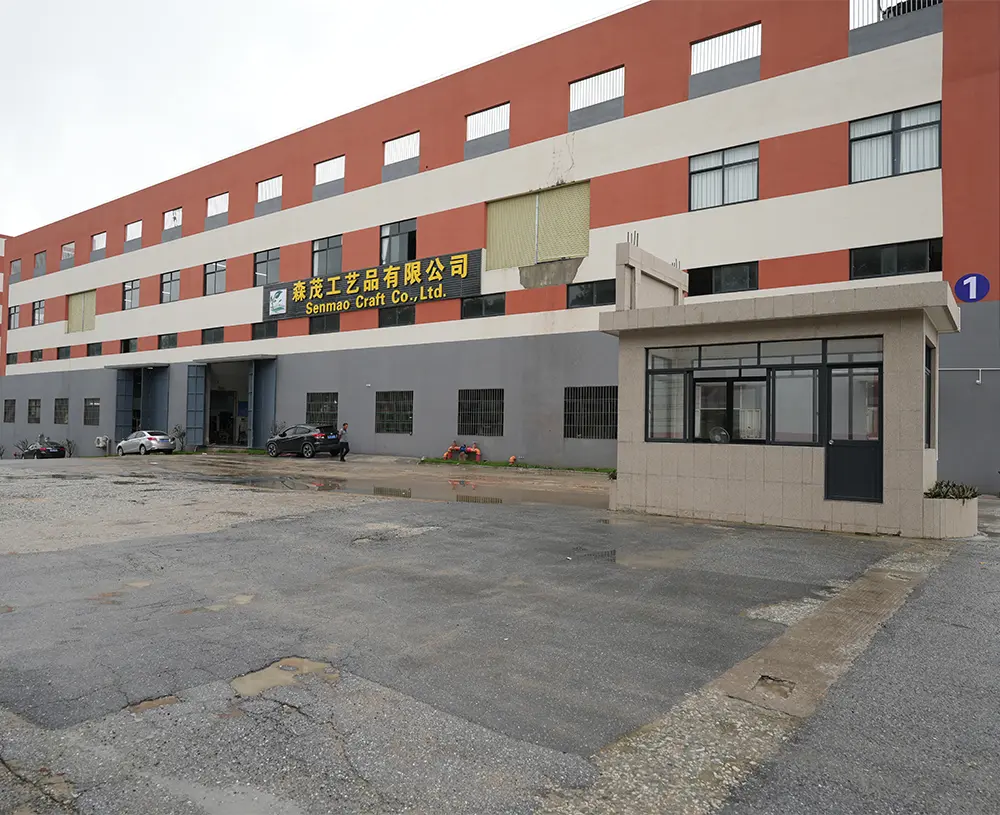
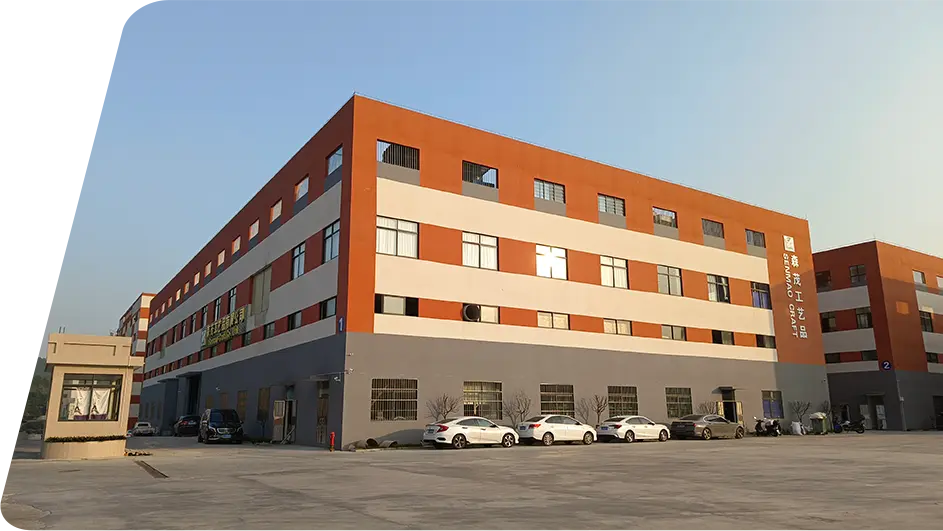
Heshan Senmao Craft Co., Ltd., situated in the vibrant city of Heshan, Guangdong, China, has firmly established itself as a leading player in the burgeoning artificial plants market. Boasting rich and profound experience within the horticultural realm, our company has mastered the art of manufacturing an extensive assortment of artificial plants.
From the stately plant trees and meticulously crafted bonsai to the charming grass balls, practical grass boards, elegant obelisks, and vibrant flower baskets, our product range is as diverse as it is impressive. We utilize advanced production techniques, ensuring that every leaf, stem, and pot reflects premium aesthetic quality and high structural fidelity. Our production base is engineered to support bulk wholesale orders, catering to international buyers across Europe, North America, and the Middle East.
China accounts for over 80% of the world's production of high-fidelity synthetic greenery. Discover the core advantages of direct factory sourcing.
Using premium PE (Polyethylene) and PEVA (Polyethylene Vinyl Acetate), factories can mimic the exact tactile response of natural plant tissues while completely eliminating harmful toxic outgassing common in low-tier PVC plants.
Located in the heart of Guangdong's manufacturing cluster, Heshan Senmao leverages integrated local supply chains—from petrochemical refining to custom bionic molding and high-precision packaging—resulting in lower unit lead times.
Modern Chinese exporters build their product pipelines to strictly align with Western environmental regulations, satisfying RoHS, REACH, ASTM weathering limits, and localized fire safety codes for commercial properties.
A technical breakdown of the engineering metrics that define the longevity, safety, and visual stability of commercial synthetic greenery.
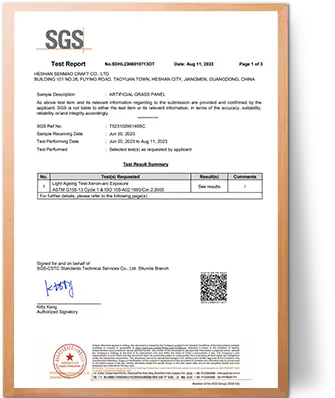
For outdoor placements, solar UV radiation is the primary catalyst for synthetic degradation. Standard plastic items crumble and discolor when exposed to high sunlight indices. High-performance factories combat this by incorporating UV Stabilizers (HALS - Hindered Amine Light Stabilizers) directly into the polymer melt prior to extrusion. This ensures compliance with **ASTM G154** accelerated weathering standards, maintaining color fastness for up to 5-8 years of outdoor exposure.
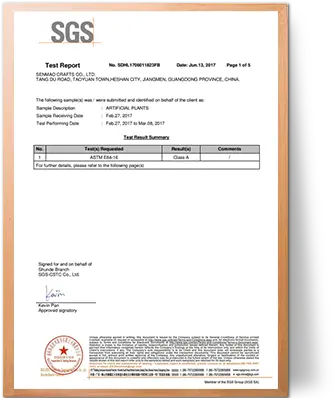
For indoor commercial lobbies, airports, and hotels, fire safety compliance is non-negotiable. Standard PE materials act as accelerants during fires. Premium manufacturers utilize mineral-based, non-halogenated flame retardants like **ATH (Aluminium Trihydroxide)** and **MDH (Magnesium Hydroxide)**. This allows products to meet critical fire rating classifications, such as **DIN 4102-1 Class B1** (Germany), and **NFPA 701** / **UL94 V-0** (United States), ensuring self-extinguishing behavior and minimal smoke toxicity.
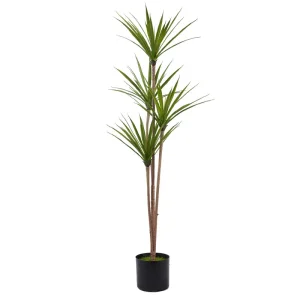
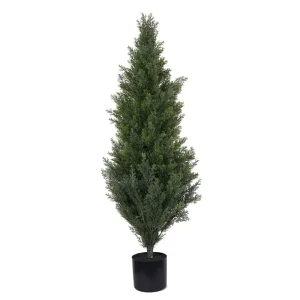
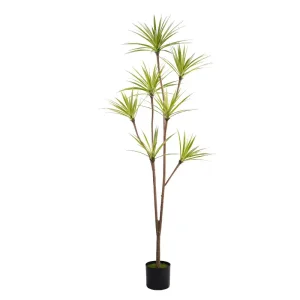
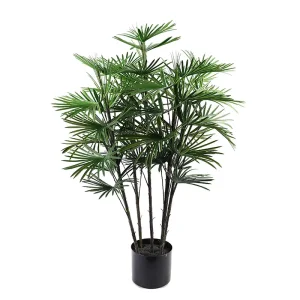
Our product line features an array of customizable artificial plants, including the graceful cypress, the tropical banana, the unique turtle, the spiral-shaped beauty, the fan palm with its distinctive silhouette, the striking tiger plant, and the classic olive trees. Each product is meticulously designed, taking into careful consideration our customers' aesthetic preferences and functional requirements. Whether it's for a cozy residential setting, adding a touch of nature to a bustling commercial space, or enhancing the ambiance of a public area, our artificial plants are the perfect choice. Moreover, our artificial plants are endowed with remarkable features. They are UV-resistant, ensuring their colors remain vivid and true even under the harshest sunlight. Their fire-resistant property provides an added layer of safety, making them suitable for various environments. Being environmentally friendly, they require no watering or fertilizing, saving both time and valuable resources.
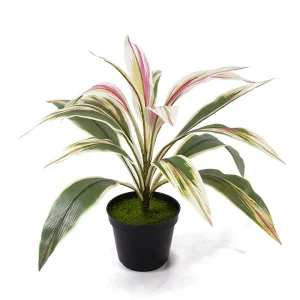
Modern artificial plants achieve high visual fidelity through advanced 3D scanning and bionic leaf molding. Rather than flat, uniform plastic cutouts, high-quality manufacturers replicate the structural complexity of natural foliage: variegated coloration, leaf vein patterns, and irregular leaf angles. Structural components (such as trunk assemblies) are reinforced with interior steel frames to support high wind loads in outdoor scenarios, while detachable branch connections permit flat-packed shipping to minimize international freight fees.
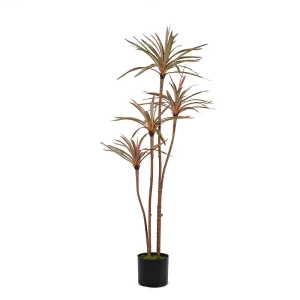
Material choices are key to high bionic fidelity. PEVA (Polyethylene Vinyl Acetate) is commonly utilized for broadleaf designs (such as Dracaena and Fan Palms) due to its soft, rubbery texture and matte finish, which eliminates the artificial plastic shine under bright interior lighting. For complex, fine structures like cypress and boxwood panels, high-density PE offers the rigidity and resilience needed to maintain structure without sagging over time.
| Material Class | Primary Feature | Core Application | Compliance Standard Met | Expected Lifespan |
|---|---|---|---|---|
| High-Density Polyethylene (HDPE) | Extreme tensile strength & rigidity | Outdoor Grass Walls, Boxwood Panels, Hedge Systems | ASTM G154 (UV Exposure), Reach compliant | 5 - 8 Years (Outdoor) |
| Polyethylene Vinyl Acetate (PEVA) | Soft tactile touch, realistic matte finish | Broadleaf potted trees, Dracaena, Fan Palms | RoHS, EN71-3 (Non-toxicity) | 8 - 10 Years (Indoor) |
| Fire-Resistant Polymers | Self-extinguishing, low smoke emission | Lobby decorations, High-traffic indoor plants | UL94 V-0, DIN 4102-1 B1, NFPA 701 | Varies by configuration |
| Recycled GRS Polymers | Sustainable & circular manufacturing | Eco-friendly artificial landscaping arrays | Global Recycled Standard (GRS) Cert. | Equivalent to virgin polymer |
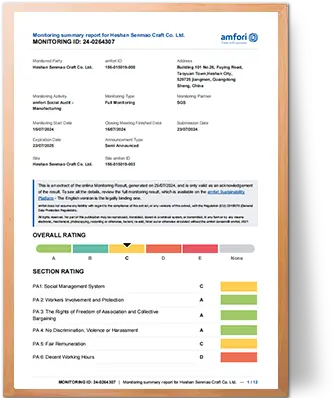
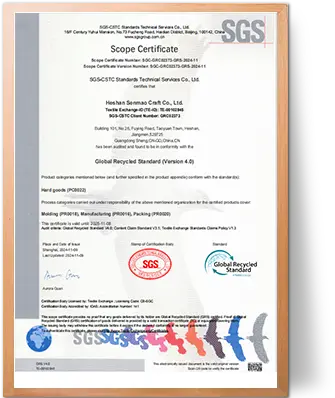
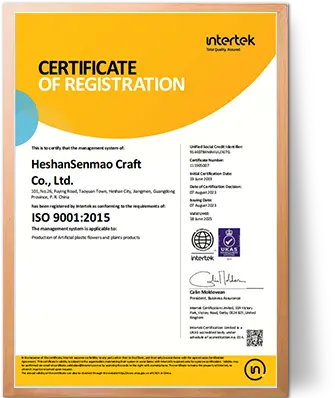
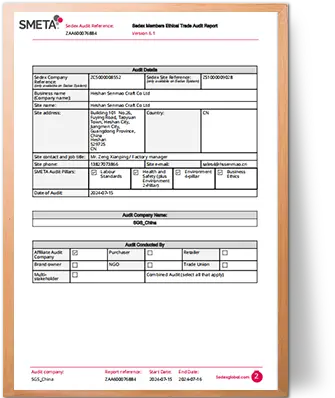
Our commitment to quality and sustainability is unwavering. We hold prestigious certifications such as BSCI, ISO9001, Sedex, and GRS, which not only attest to our strict adherence to ethical business practices but also showcase our profound sense of environmental responsibility.
When global enterprises source decorative greenery, social accountability audits (BSCI and Sedex) are critical for securing customs clearance and retail listings. Similarly, our GRS (Global Recycled Standard) certification enables corporate clients to claim LEED points for green building projects, ensuring that their interiors meet sustainable goals. This means that when you choose our products, you are not only enhancing the aesthetic appeal of your space but also making a conscious choice for a greener and more sustainable future.
A data-driven view of our global capabilities in synthetic horticulture engineering.
Deploying low-maintenance artificial landscaping solutions across multiple high-profile industries.
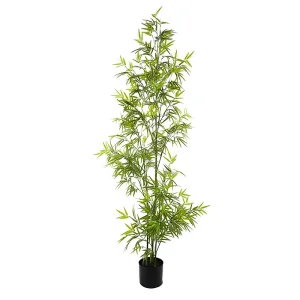
Biophilic design boosts office productivity by up to 15%. Synthetic bamboo arrays, dracaena arrangements, and PEVA foliage walls are deployed in meeting rooms and corridors where low natural light limits real plant survival.
Modern hotels and malls use dense artificial greenery to build lush, photo-friendly lobby zones. Using fire-retardant artificial palms and complex grass panel grids ensures public compliance and eliminates damp soil maintenance.
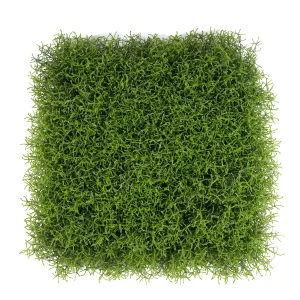
For balconies, pool areas, and private gardens, UV-stabilized boxwood fence mats and bionic grass sculptures create private, evergreen environments unaffected by seasonal changes, droughts, or freezing winter conditions.
Key technological and market projections steering the future of international green styling procurement.
Increasing focus on decarbonization is pushing manufacturers to adopt plant-derived bioplastics. Developing PE alternatives from sugarcane ethanol reduces the carbon footprint by over 30% compared to fossil fuel options.
Advancements in 3D multi-color polymer injection allow production lines to capture microscopic leaf textures, mimicking natural gloss, thickness, and stiffness levels for indistinguishable bionic outcomes.
Corporations prioritize long-term asset management. Selecting commercial artificial installations offers zero water bills, zero pest control fees, and minimal replacement costs, amortizing the investment within 18 months.
Essential guidance and professional answers for sourcing and importing commercial artificial plants.
Browse our durable exterior grass panels, topiary sculptures, and windproof bionic tree arrays.

 Senmao garden