Premium commercial-grade exterior and interior specimens manufactured with advanced polymer formulations for absolute environmental durability.




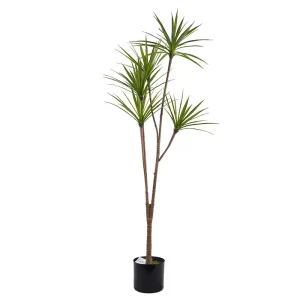
Global architectural design is undergoing a structural transition toward low-maintenance, climate-proof biophilic integration. Urban heat island effects, prolonged droughts, and skyrocketing irrigation and maintenance costs have collectively limited the viability of living ornamentals in urban centers. Synthetic exterior landscaping—most notably premium grade outdoor plastic shrubs—has evolved from a temporary spatial filler to a key component of structural design and commercial facility planning.
For municipal authorities, real estate developers, and corporate facility executives, the primary driver is the optimization of lifecycle costs (LCC). Conventional landscaping requires massive capital allocation for soil system engineering, automated irrigation infrastructure, phytosanitary management, seasonal replanting, and specialized workforce grooming. In contrast, engineered bionic foliage offers a consistent aesthetic presentation immediately upon installation, unaffected by regional climate volatility, microclimate shade, or harsh wind currents.
The table below illustrates the cost savings and maintenance differences of natural hedges compared to commercial-grade UV-resistant synthetic panels over a 10-year period (calculated per 100 square meters of vertical greenery).
| Cost Component / Operational Variable | Natural Foliage (High-Maintenance Specimen) | Heshan Senmao Engineered Synthetic Foliage |
|---|---|---|
| Initial System Installation | Moderate to High (Soil grids, structural reinforcement, automated drip irrigation) | Standard (Rigid structural backing, fast bracket mountings) |
| Annual Water Consumption | High (Approx. 120,000 Liters / Year / 100㎡) | Zero (Dry maintenance only) |
| Pesticide & Nutrient Application | Compulsory (Chemical treatment cycles to combat soil pathogens) | Zero (100% inert polymers, zero mold susceptibility) |
| Trimming, Pruning & Upkeep Labor | High (Bimonthly professional horticultural service required) | Minimal (Semi-annual pressurized water washing) |
| Replacement & Death Rate Risk | High (Average 15% replacement per year due to extreme weather or disease) | Negligible (Average physical lifecycle of 5 to 8 years outdoors) |
| Carbon Footprint / Circular Economy | Low local footprint (But high energy consumption from water distribution) | Manufactured under GRS certification with high recyclable polymer ratios |
Underneath the realistic bionic aesthetic lies a sophisticated stack of chemical and structural innovations designed to survive high-radiation and extreme weather environments.
Typical plastics degrade, embrittle, and fade under solar radiation. Our outdoor foliage is extruded with integrated Hindered Amine Light Stabilizers (HALS) directly compounded within the polymer melt. Rather than a superficial coating, this protection exists through the entire cross-section of the leaf, providing long-term protection against color fading.
Safety compliance is non-negotiable for public-access environments. During the raw resin formulation stage, we incorporate specialized non-halogenated flame retardant additives. Our industrial hedges and green panels meet stringent global building code standards, preventing fire propagation in dense urban spaces.
By leveraging combinations of Polyethylene (PE) and Polyethylene Vinyl Acetate (PEVA), we achieve an authentic, matte surface finish with natural flex. This formulation avoids the artificial shine of lower-grade PVC, retaining its structural memory even after compressed packing or high-wind pressure.
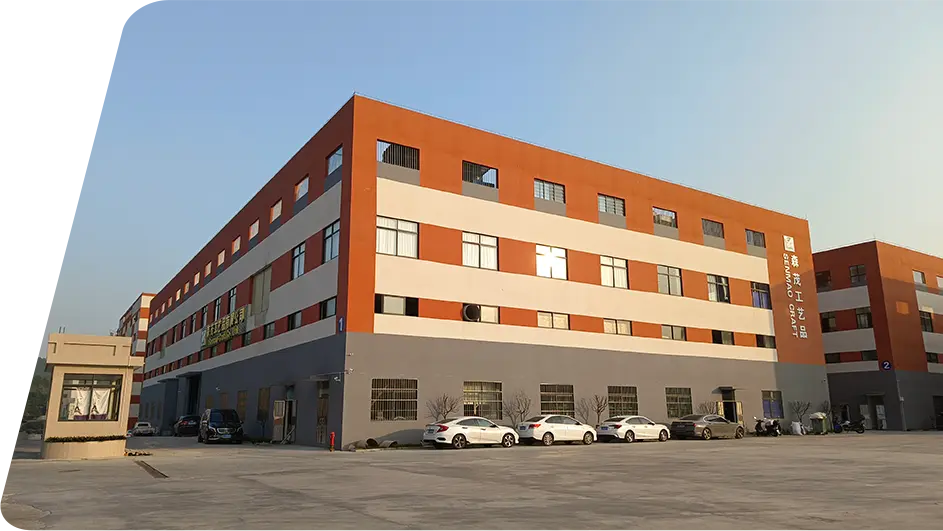
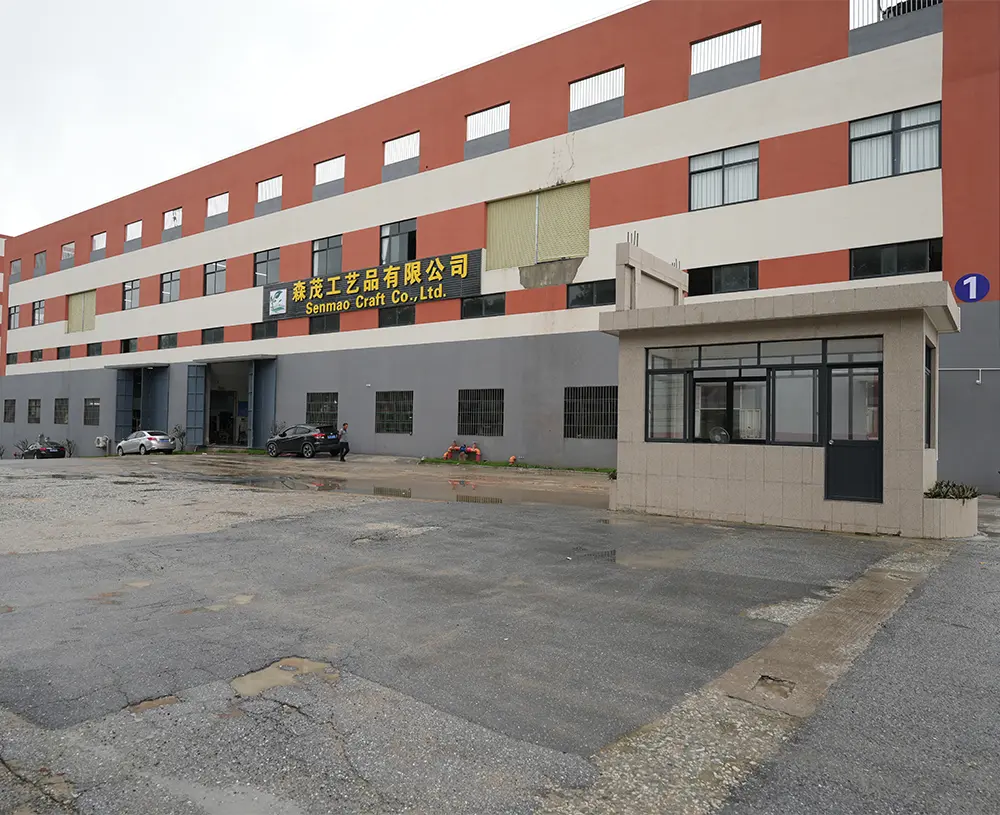
Heshan Senmao Craft Co., Ltd., located in Heshan City, Guangdong Province, China, is a manufacturing enterprise producing commercial-grade bionic flora. Leveraging decades of engineering and manufacturing experience within the international horticultural market, the company has integrated material design with high-capacity injection molding processes.
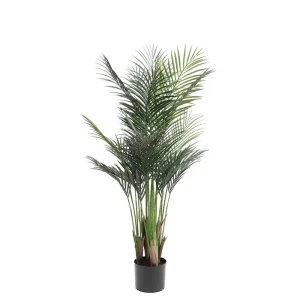
Our expansive industrial campus is optimized for rapid volume scaling, custom structural fabrication, and rigorous quality assurance. Our comprehensive product portfolio spans from large-scale bionic trees (including custom heights of cypress, banana, and palm trees) and detailed artificial bonsai to modular grass panels, retractable privacy hedges, and functional outdoor accent shrubs.
Our commitment to sustainable production, human rights, and quality management is validated by leading third-party audit groups. We maintain compliance certifications across key global supply chain systems:
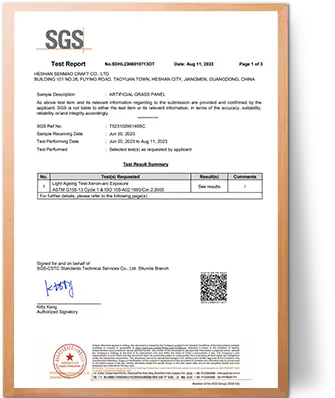
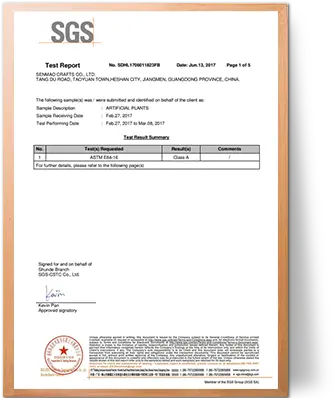
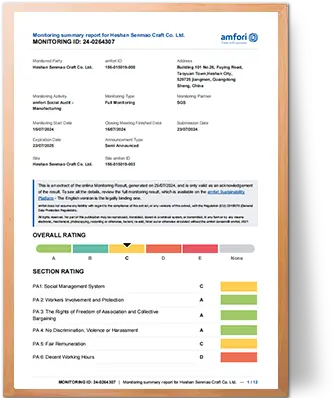
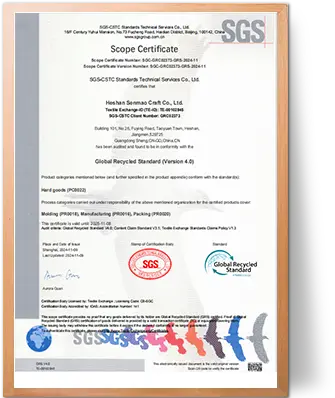
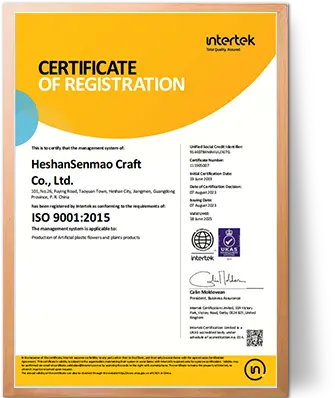
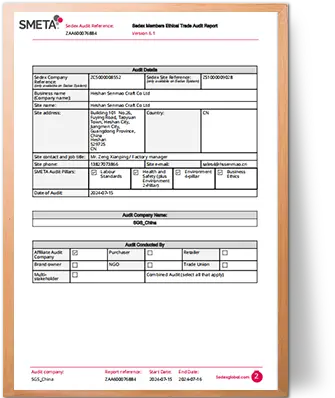
By matching the strict criteria of BSCI (Business Social Compliance Initiative), ISO9001 Quality Management, Sedex (Supplier Ethical Data Exchange), and GRS (Global Recycled Standard), we provide our global wholesale and distribution partners with import assurance, ethical sourcing validation, and environmental transparency.
Engineered synthetic foliage provides high-performance solutions for public spaces, retail storefronts, and multi-tenant commercial complexes.
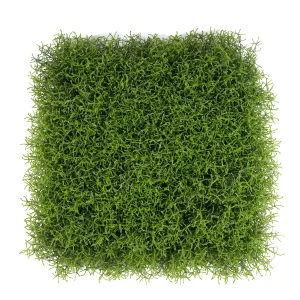
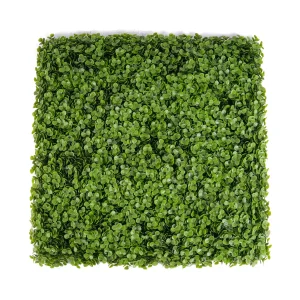
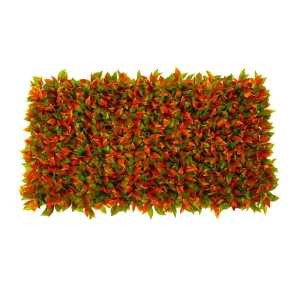
Commercial developments often require visual barriers to conceal utility systems or divide spaces. Our modular boxwood grass fence mats and retractable Photinia panels provide dense coverage that functions as an aesthetic screen and sound-dampening barrier.
Unlike real concrete or dark structural walls, synthetic green wall installations do not store heat energy. Applying UV-resistant grass panels to high-rise concrete structures shields building envelopes from direct solar load, lowering interior cooling demands.
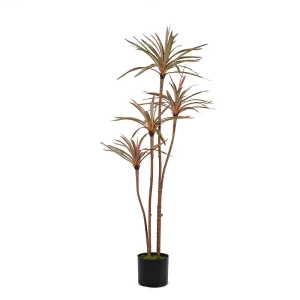
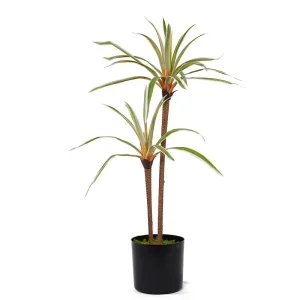
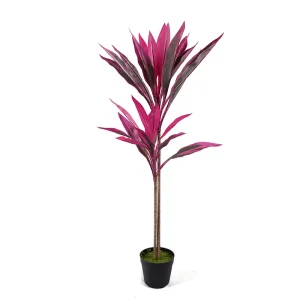
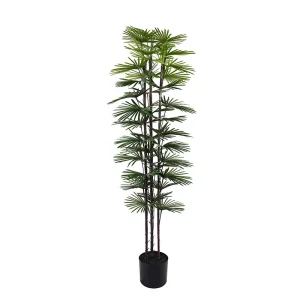
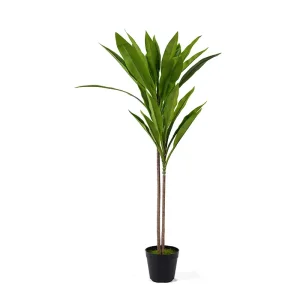
In modern hospitality spaces, green environments directly correlate with customer dwell time and net promoter scores. Potted specimens such as our bionic Fan Palms and multi-stem Dracaenas deliver tropical aesthetics to shopping malls and hotel lobbies without humidity concerns.
Navigating global building codes and health and safety requirements is a key part of our product development cycle. Standard low-end consumer artificial plants often release volatile organic compounds (VOCs) or toxic plasticizers. Our products are formulated to be odor-free, non-toxic, and free of heavy metals, ensuring compliance with strict regional guidelines like EU REACH and California Proposition 65.
Furthermore, our materials undergo simulated weathering tests, including UV exposure chambers that reproduce years of outdoor sun exposure. This data allows us to refine our polymer blends, ensuring that our products retain their color fastness, mechanical strength, and flexibility in diverse environments, from freezing northern temperatures to hot tropical climates.
As a technology-focused manufacturer, we continuously invest in materials science research to deliver sustainable, smart, and functional synthetic plants.
Transitioning our core material streams to post-consumer recycled (PCR) resins and sugarcane-derived bio-PE, cutting our net carbon footprint by half while maintaining UV stability and tensile performance.
Integrating titanium dioxide (TiO2) coatings that activate under natural sunlight. This creates a hydrophilic surface that breaks down organic dirt and dust, allowing rain to clean the foliage naturally.
Developing pigments that reflect near-infrared radiation. This reduces the heat absorption of synthetic foliage installed on building envelopes, enhancing the thermal efficiency of exterior walls.
Frequently asked questions regarding material science, testing standards, and implementation parameters.
Our products feature Hindered Amine Light Stabilizers (HALS) and UV absorbers mixed directly into the base polymer formulation. This protects the material from structural degradation, embrittlement, and color fading under UV exposure. In temperature testing, our products maintain structural integrity from -40°C up to +60°C.
Yes. We incorporate non-halogenated flame retardants during the polymer extrusion process. We can supply fire-resistant products that meet international standards (including EN 13501 and ASTM E84 testing) to satisfy building safety regulations for high-traffic environments.
Under standard outdoor conditions, our products have an expected operational life of 5 to 8 years. Factors such as local UV index levels, exposure to wind loads, and mechanical friction can influence this timeline.
Our PE and PEVA formulations are thermoplastic polymers and can be clean-ground and recycled where appropriate municipal recycling systems exist. Our GRS certification verifies that we reuse post-industrial waste within our own production cycles to support circular manufacturing.
Yes. We collaborate with architects, developers, and designers to create custom structures, including custom foliage densities, unique leaf patterns, and tailored support frameworks for green wall installations.
Products are shipped disassembled and compressed in high-density cardboard containers to minimize transport volume. Detachable designs, like our Dracaena options, allow for fast assembly on-site while reducing shipping costs.
Maintenance is minimal. We recommend rinsing the installations with clean water every six months to remove dust and debris. No chemical treatments, soil maintenance, or regular watering is needed.
Our facilities hold BSCI, ISO9001, Sedex, and GRS certifications. These verify that our production practices meet high standards for worker safety, quality control, ethical operations, and recycled material use.
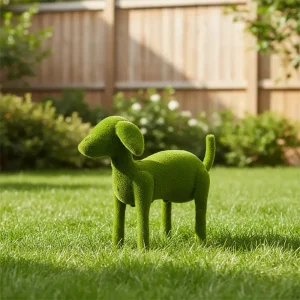
Explore our technical range of high-performance artificial grass panels, privacy screens, and detailed outdoor decorative specimens.

 Senmao garden