

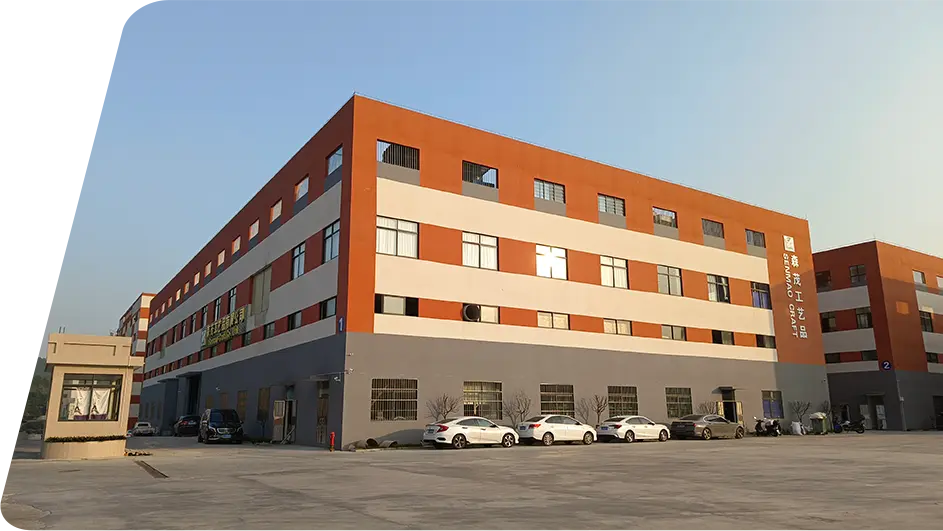
Situated in the vibrant industrial hub of Heshan, Guangdong, China, Heshan Senmao Craft Co., Ltd. has established a formidable global reputation as a premier designer and manufacturer in the artificial plants sector. Leveraging decades of deep horticultural knowledge and material science expertise, we deliver high-fidelity replica flora that seamlessly integrates into commercial, residential, and institutional environments.
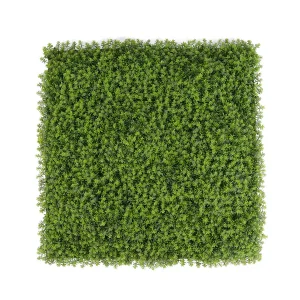
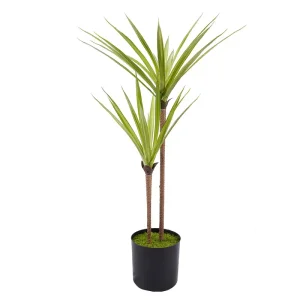
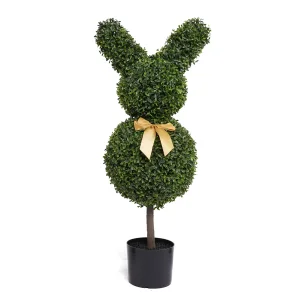
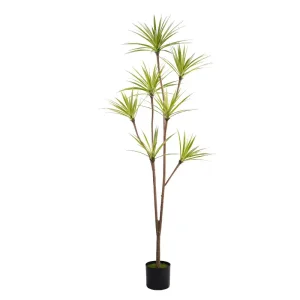
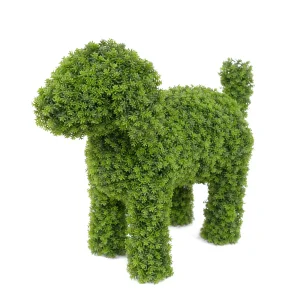
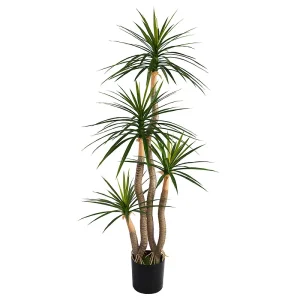
Our expansive production matrix ranges from majestic, architectural-scale mock trees and meticulously structured H43cm Bonsai installations, to versatile topiary grass balls, functional wall panels, structural obelisks, and bespoke, hand-assembled hanging baskets. We are committed to translating organic natural beauty into highly durable, synthetic botanical systems that require zero maintenance yet provide maximum visual appeal.
For bulk buyers, retail distributors, and interior architects, the H43cm artificial bonsai represents a critical design sweet spot. Standing at approximately 17 inches tall, this specification has emerged as the global standard for desktop, retail shelving, and hospitality table centerpieces. It strikes the perfect equilibrium between prominent design presence and efficient container shipping logistics.
In the commercial real estate and hospitality sectors, standard live plants are plagued by high attrition rates, light requirement limitations, and ongoing maintenance overheads. By switching to industrial-grade synthetic H43cm bonsai, businesses minimize facility management costs while maintaining a pristine, green aesthetic that fosters focus, creativity, and well-being. Our specialized manufacturing lines allow customized leaf profiles, trunk bends, and pot materials to align perfectly with regional market preferences—whether it's the minimalism popular in European markets or the bold, lush styles favored in North America.
Our H43cm bonsai dimensions are engineered mathematically to fit inside standard commercial packaging, maximizing master carton utilization and drastically reducing per-unit sea freight rates.
Equipped with class-leading polymers, our artificial bonsai systems resist degradation, fading, and structural deformation over long transport routes and prolonged display cycles.
Every batch meets international safety guidelines, utilizing zero-VOC coatings and lead-free colorants suitable for direct placement in commercial spaces and schools.
At Heshan Senmao, we refuse to compromise on authenticity and safety. Our design philosophy relies heavily on polymer engineering. By incorporating premium UV-stabilizers and FR (Flame Retardant) compounds directly into the raw polyethylene matrix during the extrusion process, our materials resist degradation and maintain deep color retention, even when exposed to intense UV rays. Unlike cheap surface-sprayed alternatives, our protection is integrated at the molecular level, ensuring that the leaves will not chalk, fade, or become brittle over time.
Additionally, our flame-resistant line is tested extensively to meet international B2B building and fire safety codes. From the elegant bionic branches of our fan palms and cypress to the meticulously detailed trunks of our olive trees, each component features structural integrity and a realistic texture that makes it virtually indistinguishable from living botanicals.
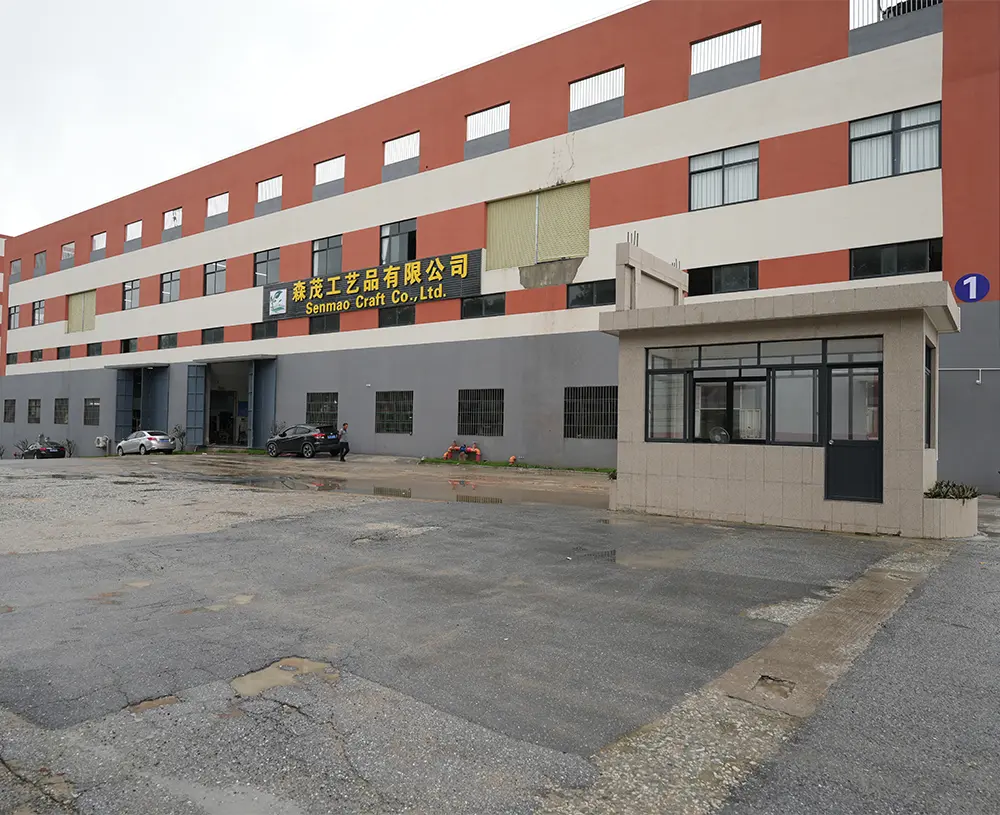
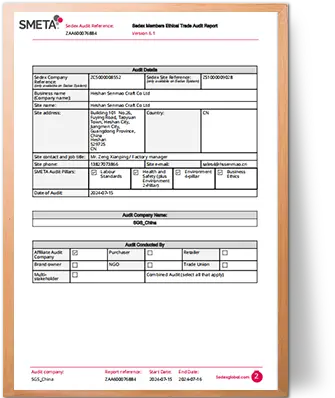
We understand that international sourcing requires bulletproof regulatory support and social responsibility. Our manufacturing plant operates under strict ethical labor practices and environmental controls, backed by the industry's most recognized global auditing frameworks.
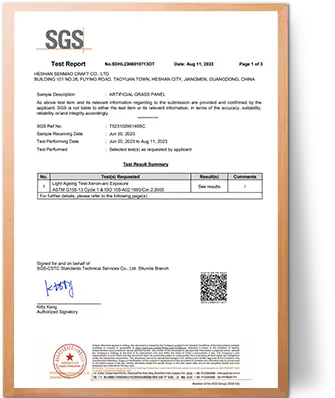
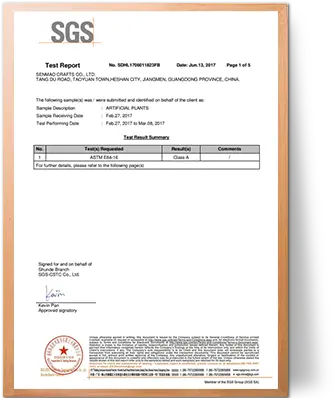
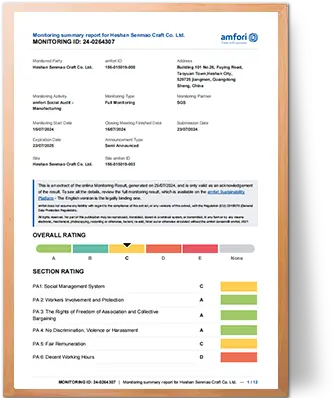

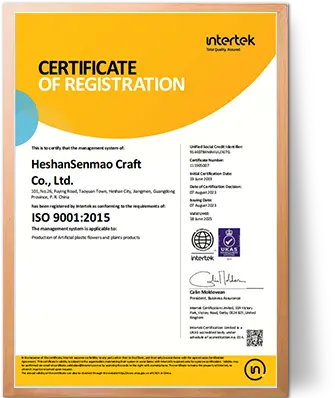
By implementing standard operating procedures verified by BSCI, ISO9001, Sedex, and GRS, we offer our B2B partners total transparency. This ensures that every container shipped complies with local ESG directives and import requirements in North America, Europe, and the APAC region. Partnering with us protects your brand equity and aligns with modern green purchasing initiatives.
We are engineering new plant-based bio-resins derived from agricultural waste, aiming to replace standard PE with fully compostable and bio-recyclable raw materials by 2026.
Clients can now submit architectural CAD files to generate 3D digital renderings of customized bonsai species, accelerating the design iteration and physical prototyping process.
By using precise laser scans of living tree bark, our mold structures capture complex textures and organic shapes, producing botanically correct stems and trunks.
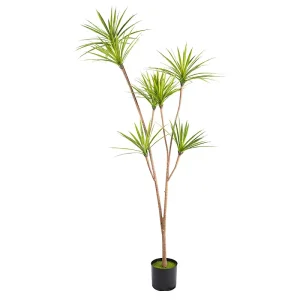
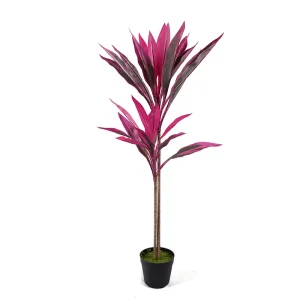
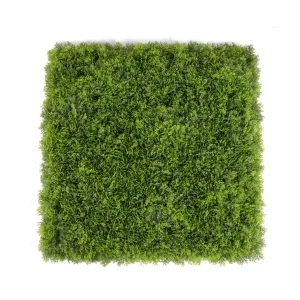


 Senmao garden